PMP® Training in NepalTake the next step in your project management career.
Structured, practical and exam-focused PMP® training in Nepal — in a Kathmandu classroom, live online, or for your team — taught by a PMI Authorized Training Partner instructor who leads product and project delivery in fintech every day.
B Instructor
Meet your instructor: concepts and real-world execution.
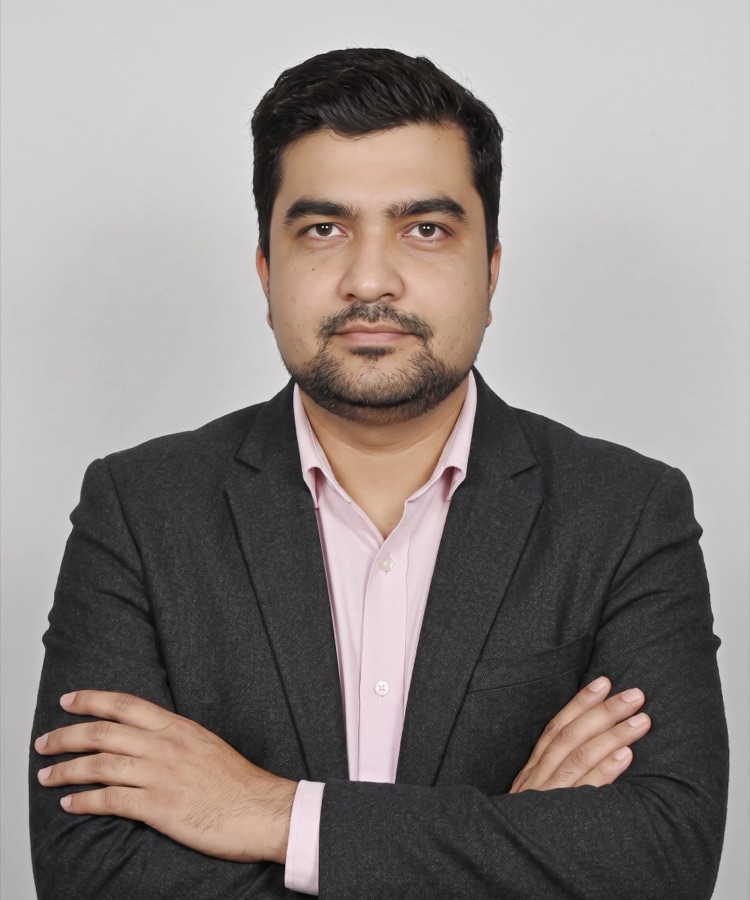
Niraj Shukla
I’m Niraj Shukla, a PMP®-certified PMI Authorized Training Partner instructor and Chief Product Officer at Nepal Payment Solutions (NPX). Before NPX I was CEO of CellPay, and earlier a product manager at Nepal Investment Mega Bank and Moru, and a business analyst at NIC ASIA Bank.
That means the examples in class aren’t hypothetical. When we cover stakeholder engagement, risk or hybrid delivery, you’ll hear how it played out shipping regulated payment products in Nepal — including the parts that didn’t go to plan. I’ve also taught undergraduate and graduate students since 2022, so I know how to make complex ideas land.
- PMI Authorized Training Partner (ATP) instructorPMI
- Project Management Professional (PMP)®PMI
- 8+ years in fintech & technologyIndustry
- CEO, CellPay · CPO, Nepal Payment SolutionsLeadership
- Product & project delivery in regulated bankingPractice
- University teaching since 2022Academia
- Predictive, agile and hybrid deliveryApproach
C What is PMP?
What is PMP certification — and is it worth it?
The PMP® certification
The Project Management Professional (PMP)® is the Project Management Institute’s flagship certification for people who lead and direct projects. It shows that you can manage the people, the process and the business priorities of a project — across predictive (waterfall), agile and hybrid ways of working.
The exam is scenario-based. Most questions describe a project situation and ask what a project manager should do next. That’s why genuine understanding beats memorisation — and why good preparation changes how you actually run projects.
What is PMI?
PMI, the Project Management Institute, is a global not-for-profit professional association for project management, founded in 1969. It develops the standards behind the PMBOK® Guide, runs certifications including the PMP® and CAPM®, and authorises training partners.
PMI Authorized Training Partners (ATPs) deliver PMI’s official PMP exam preparation, taught by instructors whom PMI has trained and approved. I teach as a PMI ATP instructor.
Why it's recognised internationally
- One global standard. The PMP is built on PMI’s international standards rather than one country’s syllabus, so it means the same thing in Kathmandu, Dubai or London.
- Experience is a prerequisite. You can’t sit the exam without documented project experience, which is part of why employers trust it.
- It has to be maintained. PMP holders earn professional development units (PDUs) over a three-year cycle to keep the credential active.
Career benefits
- A common language with sponsors, clients, vendors and international partners.
- Credibility in interviews, promotions and client proposals — PMP is frequently requested in project and programme roles.
- A structured toolkit for scope, schedule, cost, risk, quality and stakeholders.
- Confidence moving between predictive, agile and hybrid teams.
- A route into roles such as project manager, programme manager, PMO lead, delivery manager and product/technology lead.
Why PMP matters for professionals in Nepal
Nepal’s banks, fintechs, telecom operators, software companies, infrastructure projects and development organisations all run complex projects with many stakeholders — and often with international partners, donors or vendors who expect recognised project management practice.
For professionals in Nepal, PMP is a credential those partners recognise, and a way of working that travels: it’s as useful in a Kathmandu bank as it is in a multinational or when working remotely for international clients.
D Why PMP
PMP training for your sector
PMP isn't only for IT. Here's how it applies across the sectors where most professionals in Nepal work.
IT and software development
Agile and hybrid delivery, release planning, vendor and client management.
Banking and financial services
Regulated change, core and digital channel projects, compliance-driven deadlines.
Telecommunications
Network rollouts, product launches and multi-vendor programmes.
Construction and infrastructure
Large predictive projects with tight cost, schedule and procurement control.
Consulting
Client engagement, scoping, change control and delivering to contract.
Development organisations
Donor-funded programmes, reporting, stakeholder engagement and benefits tracking.
Business operations
Process improvement, cross-department initiatives and organisational change.
Product and technology management
Roadmaps, discovery and delivery — connecting product thinking with delivery discipline.
E Curriculum
Structured around PMI's PMP Examination Content Outline. Domain weights shown as reported for the current outline — confirm them in the official ECO on pmi.org.
PMP training curriculum
The curriculum follows the three domains of PMI’s PMP Examination Content Outline — People, Process and Business Environment — and then covers the delivery approaches and exam skills that run across all three.
33% People
Leading the team and working with stakeholders.
Leadership and team building
Setting a shared vision, building high-performing teams and adapting your leadership style.
Stakeholder engagement
Identifying stakeholders, understanding their needs and keeping them engaged — including sponsors and regulators.
Communication
Getting the right information to the right people at the right time.
Conflict, negotiation and influence
Handling disagreement early and reaching agreements that hold.
Coaching and team performance
Servant leadership, empowering teams, mentoring and removing impediments.
41% Process
Planning and delivering the work across predictive, agile and hybrid approaches.
Scope and requirements
Defining what's in and out, managing requirements and the backlog.
Schedule management
Work breakdown, sequencing, critical path and iteration planning.
Cost and budget
Estimating, budgeting and controlling cost, including earned value basics.
Risk management
Identifying, analysing and responding to risks before they become issues.
Quality management
Building quality in and verifying it, rather than inspecting it in at the end.
Resources and procurement
Acquiring people and vendors, contracts and managing suppliers.
Integration, change and closure
Integrated change control, knowledge transfer and closing projects properly.
26% Business Environment
Connecting the project to strategy, value and the organisation.
Business value and benefits realisation
Keeping the project tied to why it exists and tracking the benefits it should deliver.
Strategy alignment
Making sure projects support organisational goals and priorities.
Governance and compliance
Working within organisational and regulatory requirements — familiar ground in banking and fintech.
Organisational change
Helping the organisation absorb and sustain what the project delivers.
External environment
Responding to market, regulatory and technology changes during the project.
+Delivery approaches & exam preparation
Predictive project management
Lifecycles, plans and baselines; when a plan-driven approach is the right choice.
Agile project management
Agile values and principles, Scrum and Kanban, backlogs, iterations and team metrics.
Hybrid project management
Combining predictive and agile practices — how most real projects actually run.
Scenario-based exam preparation
Reading scenarios, spotting what's really being asked and eliminating answers systematically.
Mock exams and examination strategies
Timed practice, review technique, pacing and readiness before you book the exam.
This curriculum is my own structure for teaching the exam's content. It doesn't reproduce PMI course material or exam questions.
F Methodology
Understand first. The answers follow.
Conceptual understanding
We start with why a practice exists. Once you understand the reasoning, the right answer to a new scenario is usually obvious.
Practical examples
Every concept is tied to something you'd recognise at work — a delayed vendor, a changing requirement, an unhappy sponsor.
Real-world case studies
Cases from fintech, banking, payments and technology delivery in Nepal, including what went wrong and why.
Interactive discussions
You'll argue about answers. That's the point: explaining your reasoning out loud is how it sticks.
Exam-oriented preparation
Coverage mapped to the exam content outline, with a study plan that works backwards from your exam date.
Scenario-based questions
How situational questions are built, what they're really testing, and why the 'obvious' answer is often wrong.
Practice assessments
Regular checkpoints so you — and I — can see where you're strong and where to focus next.
Included in the preparation
Scenario-based question practice
Situational questions worked through for the reasoning, not just the letter.
Practice assessments
Checkpoints through the course to track your readiness.
Mock exams
Full-length rehearsal under timed conditions before you book.
G Who should attend
Who should attend PMP training?
Project managers
Formalise what you already do and earn the credential.
Business analysts
Move from requirements into leading delivery.
IT professionals
PMP certification for IT professionals stepping into lead roles.
Engineers
Civil, electrical, software — add delivery leadership to technical depth.
Product managers
Strengthen execution, stakeholder management and planning.
Team leaders
Lead larger teams and initiatives with structure.
Consultants
Bring a recognised method to client engagements.
Anyone moving into project management
Professionals from operations, finance or marketing taking on projects.
It's probably not for you if…
- You want a dump of exam answers. I don’t teach that — and it doesn’t work on a scenario-based exam.
- You don’t have project experience yet. The CAPM® may be a better first step; I’m happy to talk it through.
H Certification journey
Your PMP certification journey, step by step.
Check your eligibility
Confirm your education and months of project experience against PMI’s current requirements. Not sure? Tell me your background in the enquiry form.
Complete 35 contact hours of training
PMI requires 35 contact hours of project management education (or a current CAPM®). This is where structured training comes in.
Apply online at PMI
Create a PMI account, describe your project experience and submit the application. PMI reviews it, and some applications are randomly selected for audit.
Pay and schedule the exam
Once approved, pay the exam fee and book your exam — at a test centre or online-proctored, according to PMI’s current options. Your eligibility period gives you time and more than one attempt.
Prepare with intent
Close your gaps with scenario practice, practice assessments and timed mock exams.
Sit the exam — then keep it current
Pass, and maintain the credential by earning professional development units (PDUs) over a three-year cycle.
PMI sets and updates eligibility, fees and exam rules. Always confirm current details in the PMP Certification Handbook on pmi.org before applying.
I Training options
PMP classes in Kathmandu, online, or for your team
Upcoming batches
Dates for the next batch aren't fixed yet. Enquire now and you'll hear first — with dates, format and fees — before anything is announced publicly.
What does PMP certification cost in Nepal?
The total cost of becoming PMP-certified in Nepal has three parts:
- Training — the course that provides your 35 contact hours of project management education. The fee depends on the format (classroom, live online, corporate or individual) and is shared for each confirmed batch.
- PMI exam fee — paid directly to PMI in US dollars. Members pay less than non-members, and PMI revises its fees from time to time, so check the current figure on pmi.org before you budget.
- PMI membership (optional) — compare the member and non-member exam fees on pmi.org; for many candidates, membership pays for itself.
Ask in the enquiry form and I’ll share the current training fee for the format that suits you.
J FAQs
PMP training in Nepal: frequently asked questions
Where can I get PMP training in Nepal?
Several organisations offer PMP training in Nepal. When choosing, check whether the course provides the 35 contact hours PMI requires and whether it’s delivered through a PMI Authorized Training Partner. I teach as a PMI ATP instructor and offer classroom training in Kathmandu, live online classes, corporate training and individual guidance — send an enquiry to hear about the next batch.
How much does PMP training cost in Nepal?
The total cost has three parts: the training fee (it depends on the format — classroom, online, corporate or individual — and is shared for each confirmed batch), the PMI exam fee paid to PMI in US dollars (lower for PMI members; check the current fee on pmi.org), and optional PMI membership. Ask in the enquiry form for the current training fee.
Is PMP certification useful in Nepal?
Yes, particularly in banking and financial services, IT and software, telecoms, infrastructure, consulting and development organisations, where projects involve many stakeholders and often international partners. It gives you a recognised credential and a structured way of managing projects that’s useful at home and abroad.
Who is eligible for PMP certification?
PMI sets the requirements and updates them, so always check the current PMP Handbook on pmi.org. In summary, PMI has required: 36 months of experience leading projects with a four-year degree; 60 months with a secondary diploma or associate’s degree; or 24 months with a degree from a GAC-accredited programme — plus 35 contact hours of project management education, or a current CAPM®. Experience must fall within the recent period PMI defines.
How long does PMP preparation take?
It depends on your experience and the time you can give each week. Most working professionals complete the training and then study for several more weeks before booking the exam. Rather than quote a generic number, we’ll plan backwards from your target exam date.
Can I attend PMP training online?
Yes. Live online training is one of the formats I offer. Sessions are instructor-led and interactive, so you can join from anywhere in Nepal or abroad.
Is the PMP exam difficult to pass?
It’s challenging but very passable with the right preparation. The difficulty is less about memorising and more about scenario-based judgement: choosing the best action in a situation where several answers look reasonable. PMI doesn’t publish official pass rates, so be wary of anyone quoting one.
What is the difference between PMP and CAPM?
CAPM® (Certified Associate in Project Management) is PMI’s entry-level certification and doesn’t require project experience. PMP® is for people who already lead projects and requires documented experience. If you’re new to project work, CAPM can be a good first step — and a current CAPM can satisfy the 35-hour education requirement for PMP.
How do I apply for PMP certification?
Create an account on pmi.org, complete the online application with your education, 35 contact hours and project experience, and submit it. PMI reviews the application; some are selected at random for audit, in which case you provide supporting documents. Once approved, you pay the exam fee and schedule your exam.
What does the PMP exam cover?
The exam follows PMI’s Examination Content Outline, which organises the content into three domains — People, Process and Business Environment — and covers predictive, agile and hybrid approaches. PMI’s handbook gives the current number of questions, timing and format.
Is PMP training suitable for IT professionals?
Very. Software and IT projects use agile and hybrid approaches heavily, and the current exam reflects that. Many IT professionals take the PMP when moving into team lead, delivery or project manager roles.
Do I need to be a PMI member?
No. Membership is optional, but members pay a lower exam fee and get access to PMI resources. Compare the fees on pmi.org to decide.
Does your training provide the 35 contact hours?
The contact hours provided are stated for each confirmed batch and format. If you need them for your application, mention it in your enquiry and I’ll confirm.
How can I enrol in your PMP training?
Fill in the enquiry form with your experience, preferred format and timeline, or contact me directly by phone or email. I’ll reply with whether the next batch suits you, plus dates and fees once confirmed.
K Enquire
Ready to start your PMP journey?
Tell me where you are. There's no payment and no commitment — I'll reply with whether the next batch suits you, and the dates and fees once confirmed.
Or talk to the instructor directly
The form isn't connected yet.
Please get in touch directly at nirajshuklanp@gmail.com or call +977 9847050128.